
SUMMARY
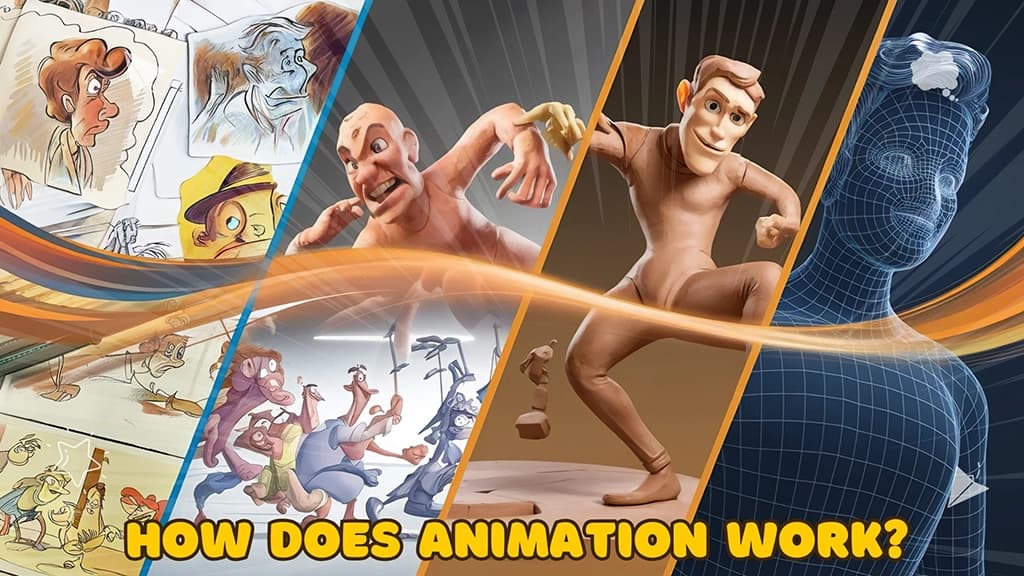
In this post, we are going to travel through the wonderful world of animation—that is, break down the different kinds of animation techniques, explore just what makes the science behind a motion illusion work, and discuss how technological advances over the years have changed this art form.
- Motion illusion created through rapid image sequences, using persistence of vision and phi phenomenon
- Cel animation uses transparent sheets for characters over static backgrounds
- Stop-motion manipulates physical objects frame-by-frame for movement
- Computer animation, especially 3D, revolutionized the field with virtual modeling
- Production follows: script, storyboard, design, animation, rendering, post-production
- Disney's 12 principles guide natural movement in animation
- Three main techniques: 2D digital, 3D computer, and stop-motion
- Physics understanding crucial for realistic animated movement
- New tech: VR/AR, AI, real-time rendering, motion capture
- Core purpose remains storytelling despite technological advances
In this post, we are going to travel through the wonderful world of animation—that is, break down the different kinds of animation techniques, explore just what makes the science behind a motion illusion work, and discuss how technological advances over the years have changed this art form.
Fundamentals of Animation: Motion and Persistence of Vision
In essence, animation is most definitely an artistic medium that creates a moving illusion by flashing a series or sequence of images. Images, or frames, run in quick succession to create what the human eye perceives to be one single moving picture. This happens mainly due to two guiding principles: persistence of vision and the phi phenomenon.
- Persistence of Vision: If an image flashes before us, it persists in our brain for a fraction of a second after the image has disappeared. This means that our brains hold onto one image just long enough to merge it with the next, and the sense of continuity is smooth.
- The phi phenomenon: Discovered in 1912, this is a phenomenon in which the brain constructs motion from successive images. The flashing of images in succession with slight changes allows the brain to connect them by the creation of an effect of continuous movement.
Traditional Animation Techniques: The Roots of the Art
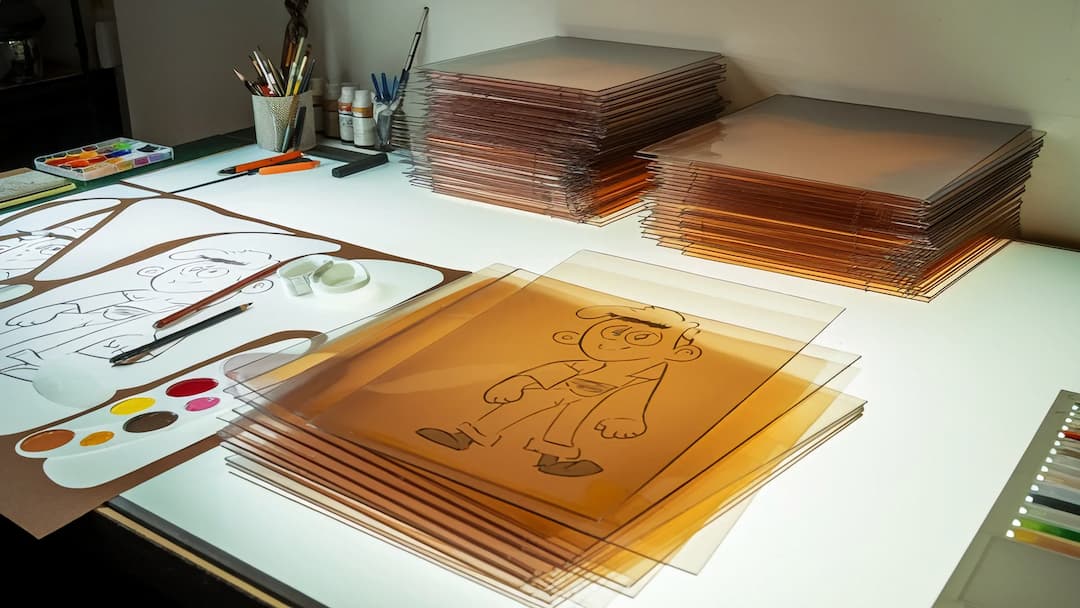
The animation first appeared using traditional techniques, actually drawing and painting every frame by hand. It is this very exhaustive way of creating, using a technique also called cel animation, that gave birth to a number of animated classics.
- Cel Animation: This involves the drawing of characters on transparent sheets or “cels” laid over static backgrounds. Each change in movement requires a new drawing which is then photographed in sequence to create motion. For instance, if a character raised his arm, he'd have to be drawn on dozens of individual cels, each with his arm slightly different.
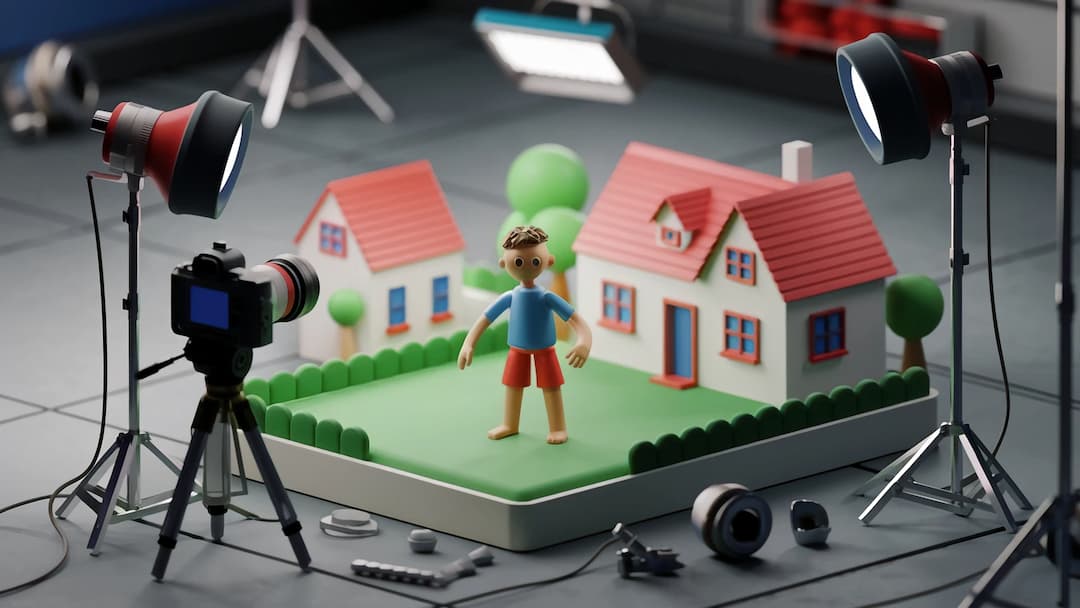
- Stop-Motion Animation: In this form of traditional animation, stop-motion involves physically manipulating an object—usually clay or a puppet—and photographing the object in small increments to show movement. By relying on the brain smoothing out the movement between a series of static frames through persistence of vision, this technique works.
Computer Animation - Bringing the Art Form into the Digital Age
As technology did evolve, so did animation. Now, it is computers that play the main part in almost every aspect of animation production—from storyboarding to rendering final frames.
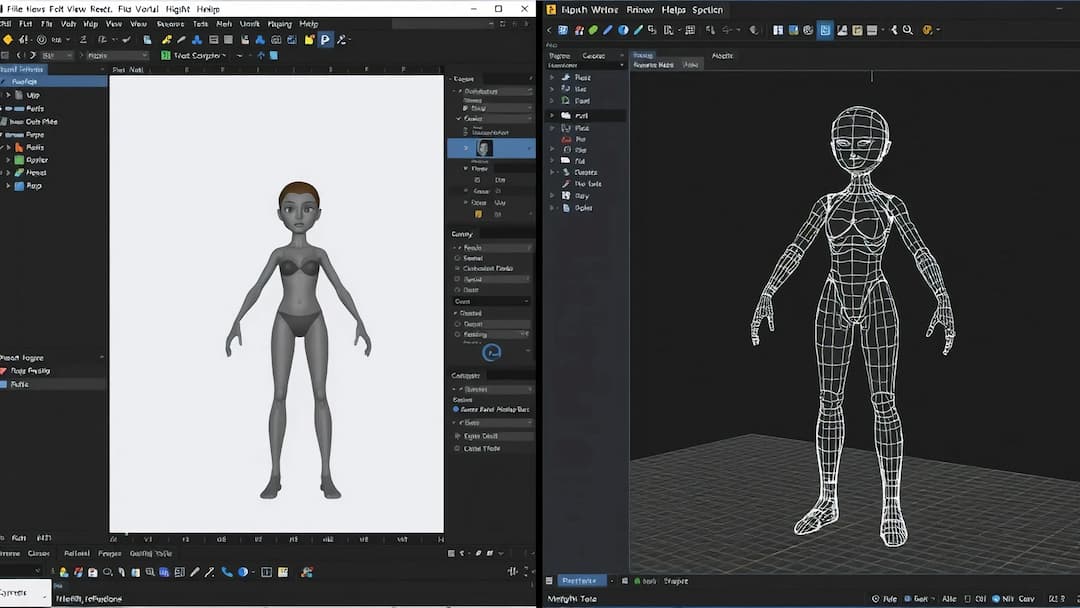
- 2D Computer Animation: With the rapid development of 2D animation software, the translation of traditional techniques into their digital form was realized. Now, artists were drawing or rigging characters on digital tablets, and software emulated the motion of cel animation without literally using cels.
- 3D Computer Animation: The advent of 3D animation really revolutionized the industry. Instead of drawing frames, it deals with the creation of virtual models of characters and other objects. The animators make motion through these models in their 3D space to make them move in a realistic way. Movies like Pixar's Toy Story showed what “magic” 3D animation is capable of, and since then, the industry has never looked back. Software is paving the way to having more complex scenes and characters both in 2D and 3D formats. The animator is no longer bound to use simply hand-drawn images; therefore, great detail is achievable with efficiency.
Principal Animation Techniques: 2D, 3D, and Stop Motion
Today, animation can be done via many techniques, all of which have their own form and purpose:
- 2D Animation: This classic style involves the creation of flat images moving around a two-dimensional space. Traditionally, this was done by drawing every single frame by hand up until digital means allowed the very same process using software such as Adobe Animate or Toon Boom. A simple style for sure, 2D animation is still in friction across both television series, video games, and education.
- 3D Animation: As explained, 3D animation creates characters and environments in a three-dimensional space with the use of software such as Maya or Blender. It finds applications in feature films, video games, and VR applications where realistic textures and lighting effects are involved.
- Stop-Motion Animation: This technique, though similar in concept to traditional cel animation, requires the physical moving of objects in real space and photographing. Popular in films such as Wallace and Gromit and Coraline, this technique offers a tactile feel that can't be fully replicated with digital means.
Production Process - How is Animation Created?
Whatever the technique, however, there's usually a standard production process for animation. Here's a look at the phases:
- Concept and Writing of the Script: All projects of animation begin with some sort of idea. After the concept has been approved, writers develop a script that sets the story, dialogue, and pacing.
- Storyboarding: This is the graphic interpretation of the script, comprising key scenes and sequences. It's the blueprint of the animation, showing how the story unfolds.
- Character and Environment Design: The designers flesh out the characters, props, and environments according to what has been done on the storyboard. It is here that the exact visual seems to come into view.
- Animation (Keyframing and In-Betweens): To perform a 2D or 3D animation, an animator needs to draw or model the keyframes that tell the major points within a movement sequence. The animator fills in the lost frames between the keyframes so as to have smooth, continuous motion, the “in-betweens.”
- Texturing, Lighting, and Rendering: Texturing involves color and surface detail on objects in 3D animation, while lighting defines the mood and atmosphere. Rendering is actually the final step of processing and exporting scenes as high-quality frames.
- Post-Production: This phase is when sound, voiceover, and effects are added to finally complete the animated project and enhance its emotional and sensory impact.
Physics of Animation: Why Movements Look Real
The creation of realistic motion is based upon the understanding and application of the rules of physics that the animator has internalized, often referred to as the “12 principles of animation.” Developed by animators working for Disney in the 1930s, these principles guide artists in the creation of natural-looking motion. Some of the techniques include the following:
Here is a dedicated blog regarding 12 Principles of Animation
- Squash and Stretch: This principle gives flexibility to objects and exaggerated motion in order to show, for instance, that the object is flying. When a character jumps up, the body may stretch upward in anticipation and squash down when landing to give a sense of impact.
- Anticipation: The general movement of a character is usually preceded by a small, anticipatory motion. For instance, a running character might bend their knees ahead of time before leaping forward; it just feels less artificial that way.
- Follow-Through and Overlapping Action: This means that when a character stops moving, part of their body could continue in the direction of the movement, such as hair or a scarf, in order to enhance the flow of action to make it look realistic.
Here is a dedicated blog regarding 12 Principles of Animation
Animations and Emerging Technologies
With the evolution of technology, animation techniques also change. Below, spot several emerging trends that are pushing the boundaries of animation:
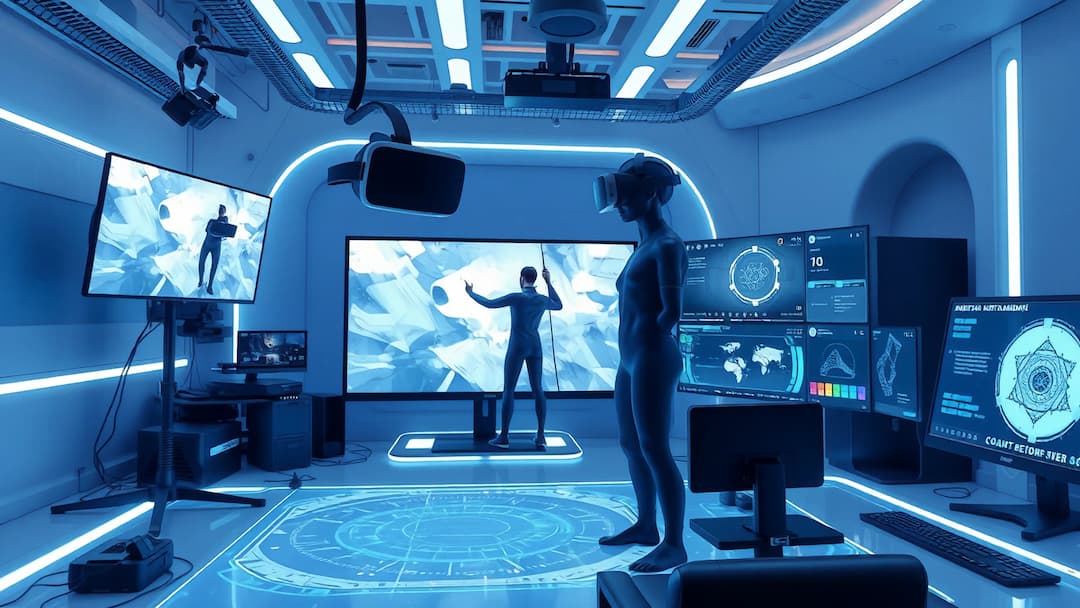
- Virtual Reality and Augmented Reality: Through VR/AR, audiences can fully immerse themselves in animated worlds. These technologies use 3D animation and real-time rendering to make users feel part of the scenery.
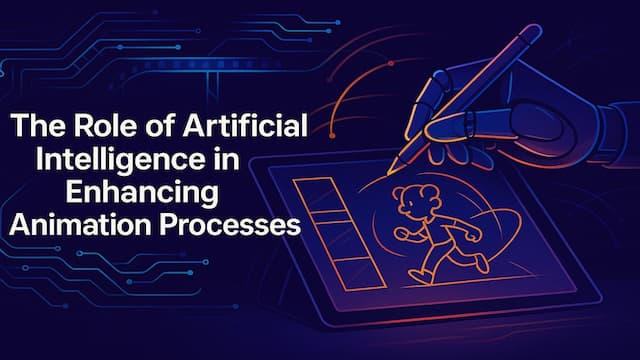
- Artificial Intelligence and Machine Learning: AI algorithms can already use data from the real world to automate some parts of the animation process, such as facial expressions and lip-syncing. Applications of machine learning can also be used to enhance the movement of characters and make the animation more realistic.
- Real-Time Rendering: The development of computing power today enables real-time rendering, which means the animator can see their work in an instant. This technology is used in video games and a few animated films; it makes it easier and smoother with more speed during iterations.
- Motion Capture and Performance Capture: Motion capture refers to the process of recording the actual actors' movements and applying it to digital characters. This technique has been widely used in movies and video games for realistic human motion. Performance capture is an extended version of capture; it also includes capturing body language and facial expressions.
Conclusion
At the bottom, animation is a storytelling medium. No matter how advanced these tools and techniques become, the magic of animation will always reside in its power to convey an idea, an emotion, or an experience through generations that truly strikes deep into the hearts of audiences. Bright, colourful, and ready to leap off the screen in ways we can only just imagine, the future of animation looks replete with promise.
FAQ
- How does the illusion of motion function in animation? It is created through the persistence of vision (when the brain holds onto an image for a moment after it vanishes) and phi phenomenon (when the brain is tricked into seeing continuous motion between very changing static images that happen fast in succession). Together, these theories enable frame sequences to seem liquid.
- What are the major distinctions between 2D, 3D, and stop-motion animation? 2D: Flat, hand-drawn or computer-generated images within a 2D plane.
- What is the function of Disney's 12 principles of animation? These principles (e.g., squash and stretch, anticipation, follow-through) help animators to create natural movement by simulating real physics, making actions look and feel like they would in real life, and be expressive.
- What are the primary steps involved in the animation production process? The steps involve scriptwriting, storyboarding, character/environment design, keyframing and in-betweening, texturing/lighting, rendering, and post-production (sound and effects addition).
- How are technologies such as AI and VR influencing contemporary animation? New tech like AI makes tasks automatic (e.g., facial expressions), VR/AR provides immersive 3D experiences, and real-time rendering accelerates production. Motion capture adds realism by mapping actors' movement into digital avatars.
3D: Computer-generated 3D models rendered as if in a real-world environment for realistic depth.
Stop-motion: Physical models (e.g., clay, puppets) manipulated incrementally and captured frame by frame.